Blog
The Art of the African Mask: Meaning, Tradition, and How to Display Them

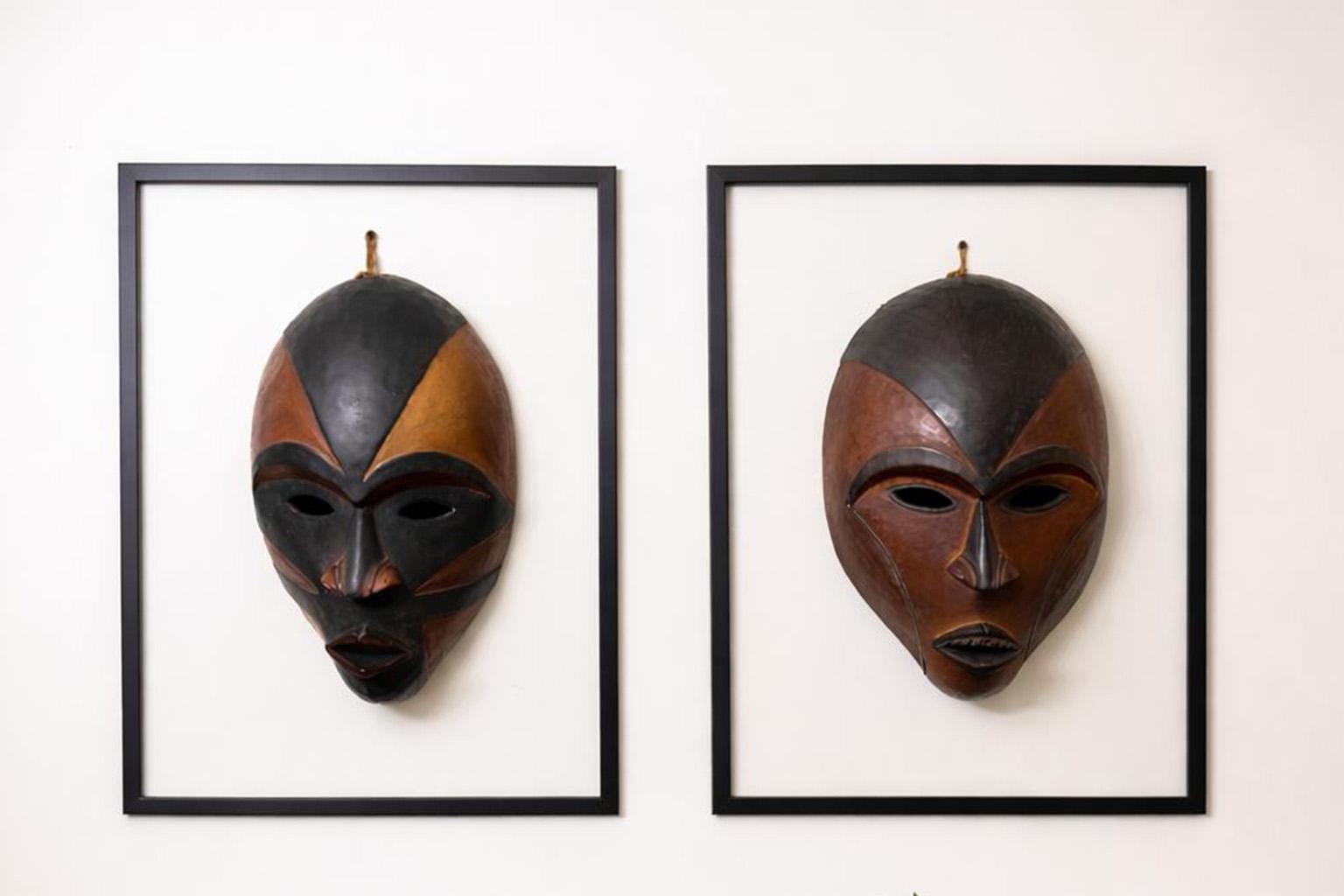
African masks are among the most powerful and recognisable forms of African art. They are sculptural, expressive and full of presence. Unlike ordinary wall decor, a mask brings depth, shadow, symbolism and cultural character into a space.
For modern British homes, African masks offer something truly special. They can transform a plain wall into a focal point, add warmth to a hallway, bring personality to a living room and create a curated, gallery-style atmosphere.
At Burudani, African masks are chosen not only for their decorative beauty, but also for the sense of heritage, craftsmanship and story they bring into the home.
Why African Masks Are So Meaningful
African masks have long been connected with ceremony, identity, storytelling, spirituality and community. Across different African regions and cultures, masks have been used in dances, rituals, celebrations, initiations, royal ceremonies and performances.
While every mask has its own background and meaning, many are traditionally associated with ideas such as:
- ancestral presence
- protection
- wisdom
- status
- transformation
- fertility
- celebration
- connection with nature
- spiritual power
This is what makes African masks so much more than decorative objects. Their shapes, colours, textures and expressions often carry symbolic meaning. A bold open mouth may suggest power or performance. Large eyes may represent vision or awareness. Beadwork may reflect prestige, beauty or ceremonial importance. Animal features may connect the mask to strength, courage or the natural world.
Even when displayed in a modern home, an African mask still carries that sense of depth and presence.
 African Masks as Sculptural Wall Art
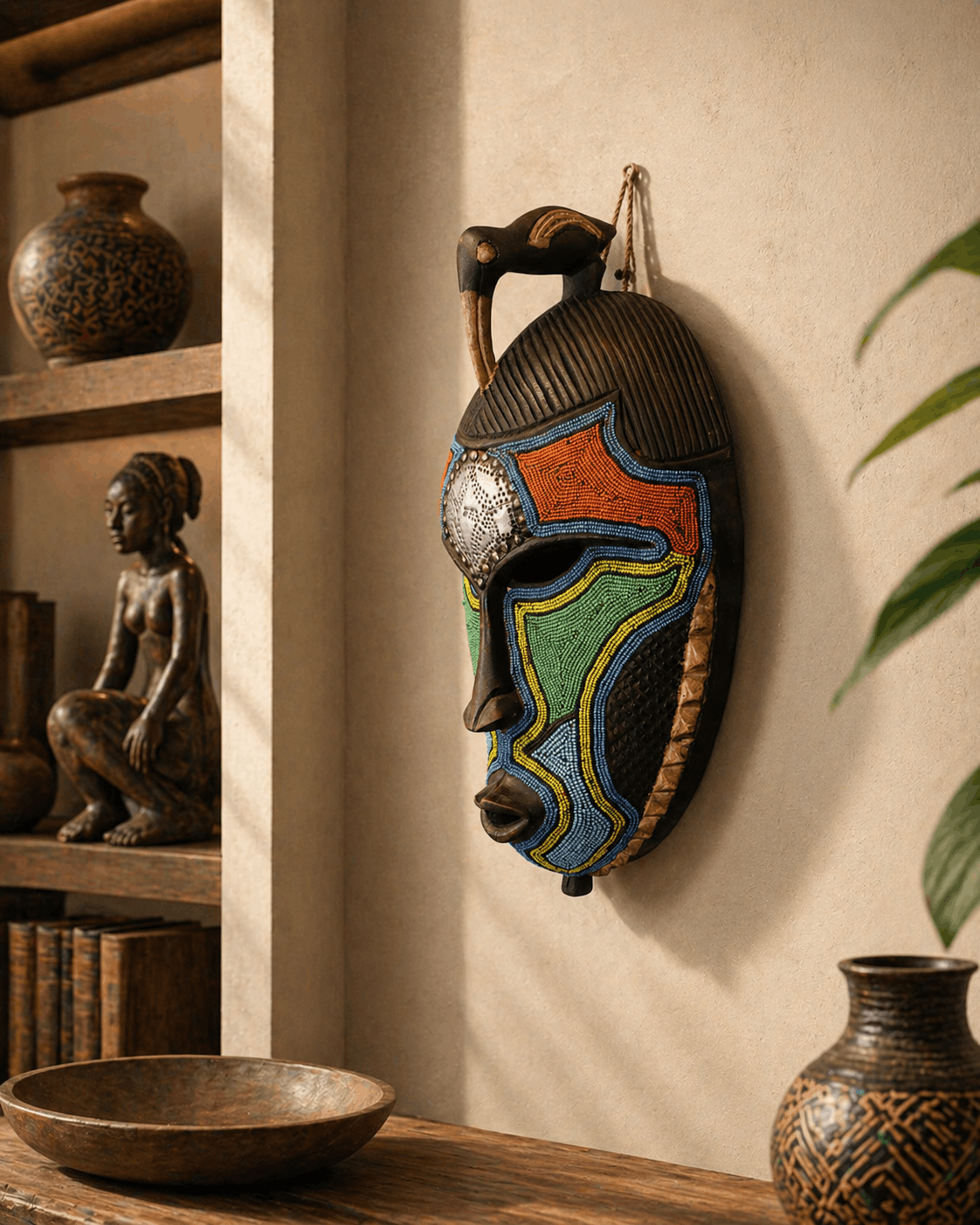
One of the reasons African masks work so beautifully in interiors is their three-dimensional form. A painting adds colour and story, but a mask adds shape and shadow.
When placed on a wall, a mask becomes a sculptural feature. It changes as the light changes. In the morning, it may feel soft and warm. In the evening, with a lamp nearby, it can become dramatic and atmospheric.
This makes African masks ideal for homes that need character and texture. They are especially effective in spaces that feel too flat, too minimal or too plain.
A single African mask can create more impact than several ordinary prints.
Types of African Masks for the Home
African masks come in many styles, materials and finishes. Choosing the right one depends on the mood you want to create.
Wooden African Masks
Wooden masks are timeless and versatile. Their earthy tones work beautifully with natural interiors, rustic homes, Afrohemian decor and Bohemian styling.
A wooden mask can feel calm, ancestral, bold or mysterious depending on its form. Dark carved masks are excellent for dramatic interiors, while lighter brown or terracotta-toned masks bring warmth and softness.
Beaded African Masks
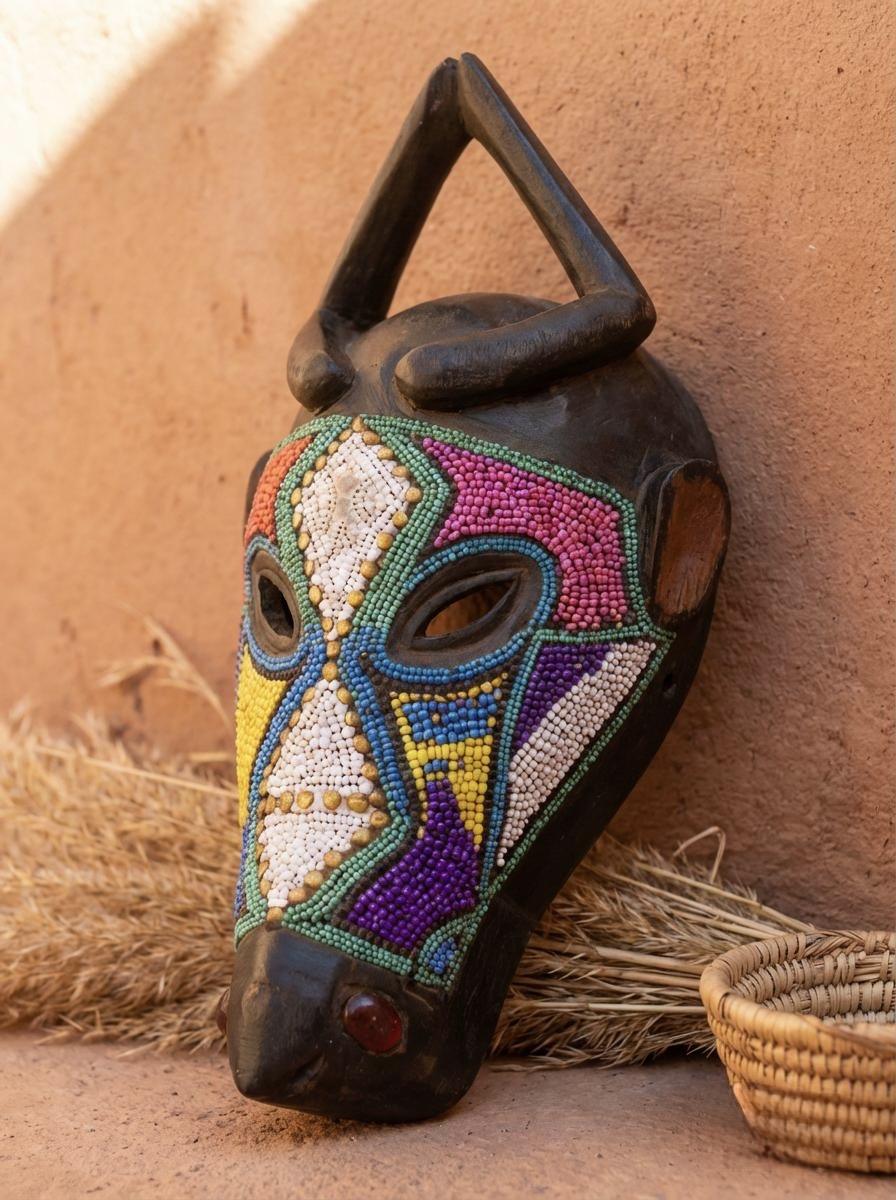
Beaded masks are colourful, detailed and highly decorative. They often feature geometric patterns, metallic accents and vibrant glass beads.
These masks are perfect if you want a statement piece with energy and visual richness. They work especially well on neutral walls, where the colours can stand out clearly.
Vintage and Antique African Masks
Vintage and antique-style masks bring age, patina and collector character into the home. They are ideal for people who love interiors with history and depth.
A vintage mask can make a room feel curated rather than newly decorated. It works beautifully in gallery walls, study rooms, hallways and collector-style interiors.
Animal-Inspired Masks
Some masks include animal-like features such as birds, antelope, gorillas or other symbolic forms. These pieces can represent strength, protection, wisdom or connection with the natural world.
They are excellent for bold decorative displays and interiors that embrace cultural storytelling.
 How to Display African Masks at Home
Displaying African masks well is about balance. A mask has strong presence, so it should be given space to breathe.
Use One Mask as a Statement Piece
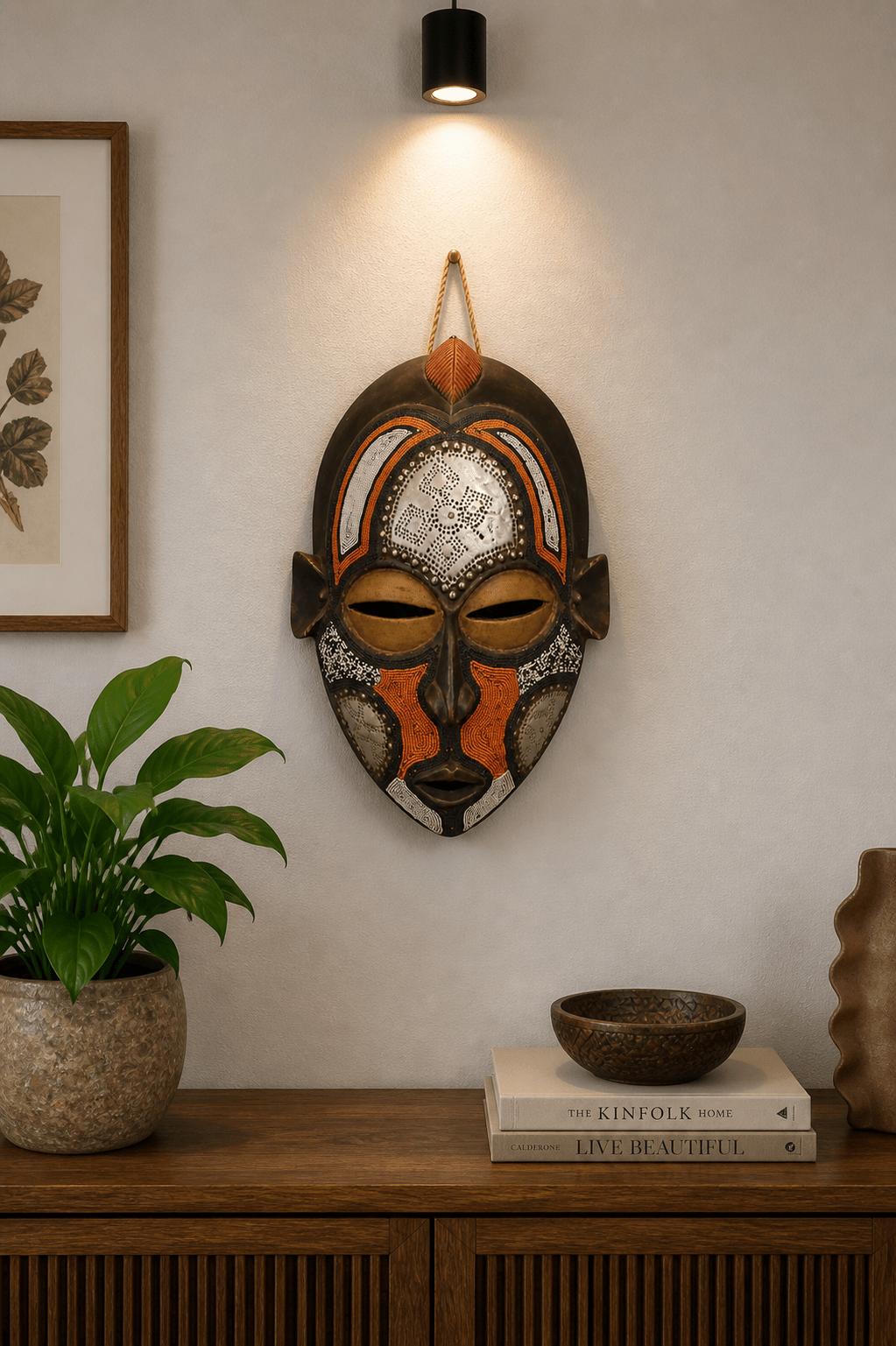
The simplest and most effective approach is to display one large mask on its own. This works especially well in a hallway, above a console table, beside a fireplace or on a feature wall.
A single mask can create a clean, gallery-style look while still feeling warm and expressive.
Create a Mask Gallery Wall
If you have several masks, you can create a gallery wall. Mix different sizes, shapes and colours, but keep enough spacing between each piece.
For the best result, arrange the masks around a central point and vary the heights slightly. This creates movement without looking messy.
A mask gallery wall is perfect for staircases, dining rooms, creative studios and large living room walls.
Pair Masks with African Paintings
African masks look beautiful beside African paintings. A canvas portrait, wildlife artwork or mixed-media textile painting can soften the sculptural strength of a mask.
This combination creates a rich Afrohemian wall display with both flat artwork and three-dimensional texture.
Style Masks Above a Console Table
A console table gives a mask a natural base. Place the mask above the table, then style the surface below with pottery, baskets, books, candles or a small plant.
This works particularly well in entrance halls and living rooms.
Use Lighting to Create Atmosphere
Lighting makes a huge difference. A wall light, table lamp or spotlight can highlight the texture and shape of a mask.
Warm lighting is best. It brings out the wood tones, beadwork and carved details while creating a more intimate atmosphere.
Where African Masks Work Best
African masks are very versatile and can be used throughout the home.
Hallway
A hallway is one of the best places for a mask. It creates an immediate impression and makes the entrance feel warm, cultural and memorable.
Living Room
In the living room, a mask can be placed above a sideboard, near a fireplace or as part of a gallery wall. It adds texture and personality to the main social space.
Dining Room
Masks work beautifully in dining rooms because they bring atmosphere and conversation. A dramatic mask on a feature wall can make the space feel more intimate and interesting.
Home Office
A mask in a home office adds focus, creativity and individuality. It can make a workspace feel more curated and less corporate.
Bedroom
For bedrooms, choose softer, calmer masks with warm tones and balanced expressions. Avoid overly dramatic pieces if you want a peaceful atmosphere.
African Masks and Afrohemian Decor
African masks are a key element of Afrohemian interiors. Afrohemian decor combines African craftsmanship with relaxed Bohemian warmth, creating homes full of texture, earth tones and handmade character.
Masks work perfectly with:
- wooden furniture
- woven baskets
- African paintings
- pottery
- linen textiles
- rattan pieces
- houseplants
- warm lighting
- vintage and antique objects
Together, these elements create a home that feels collected, personal and full of soul.
A mask does not need to match everything in the room. In fact, it often looks best when it stands out slightly. That contrast is what gives the space character.
How to Choose the Right African Mask
When choosing an African mask, think about scale, colour and mood.
For a large wall, choose a bold mask with strong shape.
For a narrow hallway, choose a tall vertical mask.
For a neutral room, choose a beaded or colourful mask.
For a calm room, choose a wooden mask with warm earthy tones.
For a collector-style space, choose vintage or antique pieces with patina.
Also consider how the mask will sit with the rest of your decor. If your room already has many colours, a wooden mask may balance the space. If your room is very neutral, a beaded mask can add energy and interest.
Why Handmade Masks Feel Different
Handmade African masks have a presence that mass-produced decor cannot recreate. The carved lines, beadwork, natural marks, slight imperfections and aged finishes all add to the character of the piece.
These details make every mask feel individual. They remind you that the object has been shaped, decorated and finished by hand.
That handmade quality is one of the reasons African masks are so popular in modern interiors. People are moving away from generic decoration and looking for pieces with story, craft and soul.
Bring Meaning and Character Into Your Home
African masks are more than wall decorations. They are sculptural artworks with history, symbolism and visual power. They bring warmth, depth and cultural beauty into the home.
Whether displayed as a single statement piece, arranged in a gallery wall or paired with African paintings and pottery, a mask can completely transform the atmosphere of a room.
Explore Burudani’s African mask collection to discover handcrafted, beaded, wooden, vintage and decorative masks that bring authentic Afrocentric style into modern British homes.