Blog
Afrohemian Decor: The 2026 Interior Trend That’s Taking Over British Homes

Pinterest calls it the trend of 2026. Vogue, Forbes, and House Beautiful are all writing about it. And if you've spent any time on interiors Instagram lately, you've already seen it without knowing its name.
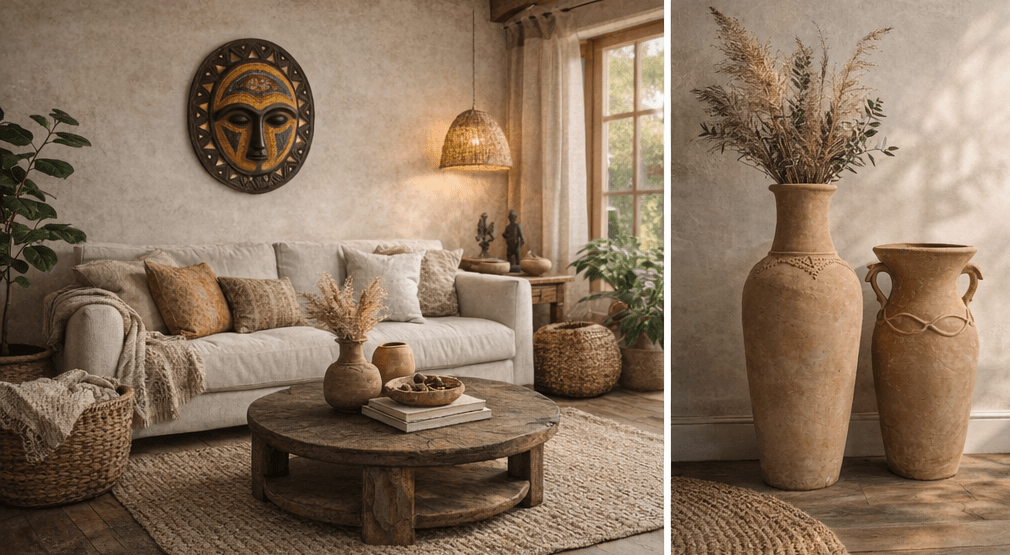
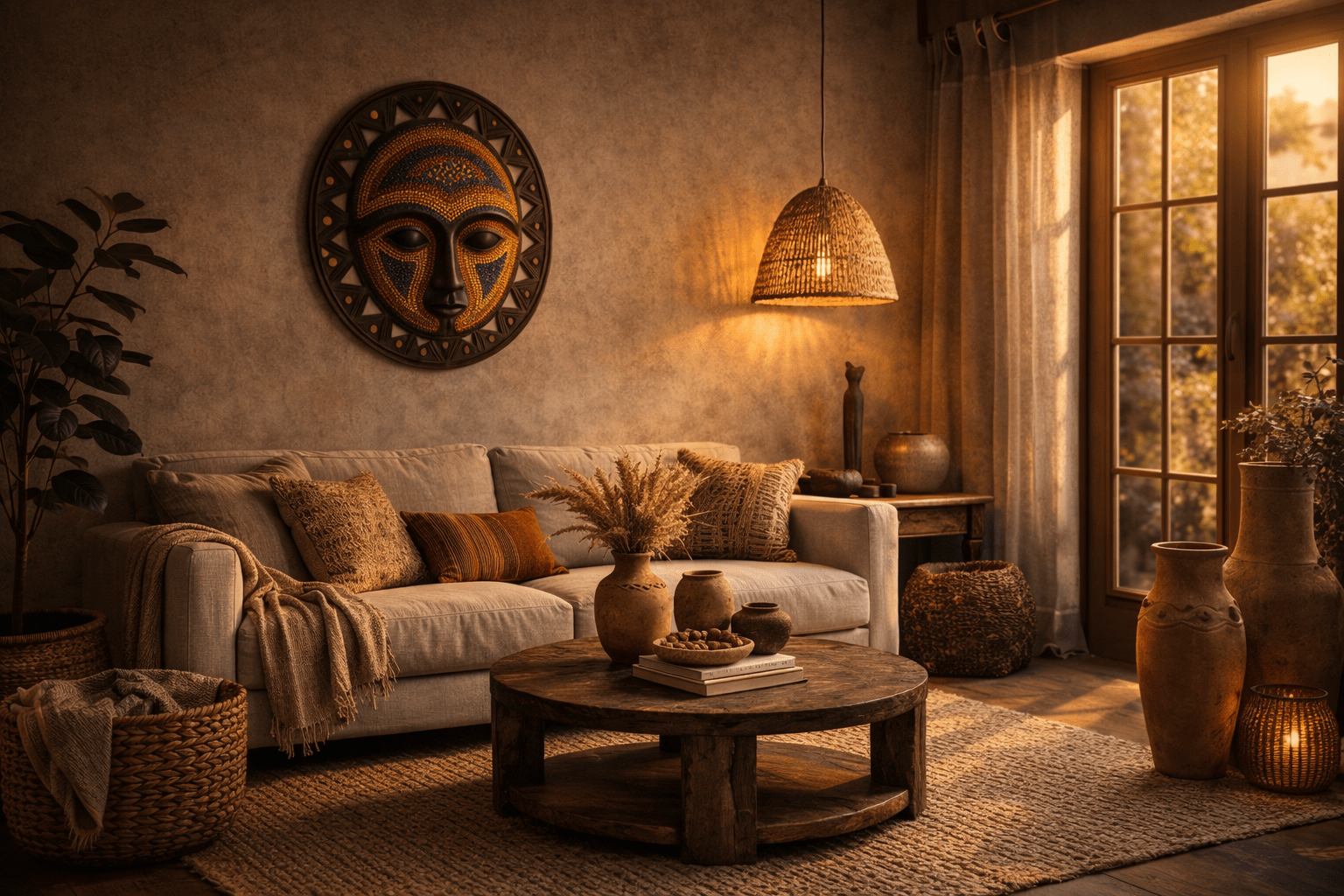
Afrohemian decor is the fusion of African artisan craft with bohemian styling. Think handwoven baskets paired with linen throws. Carved wooden masks above a velvet sofa. Earth-toned pottery vases filled with dried pampas grass on a reclaimed wood table. It's warm, tactile, grounded, and full of story.
If you're reading this and thinking "that sounds like what I already want my home to feel like," you're not alone. Searches for "African boho living room," "Afro chic home decor," and "Afrohemian interiors" are surging across the UK, particularly among homeowners in their 30s, 40s, and 50s who are tired of fast, disposable decor and want something that actually means something.
And here's what makes it different from other trends: you don't need to redecorate. You just need the right pieces in the right spots.
What is Afrohemian decor, and why is it everywhere in 2026?
Afrohemian style sits at the intersection of three bigger movements that have been building for years. First, the shift toward sustainability as standard, not as an add-on. Consumers increasingly want to know where their homeware comes from, who made it, and what it's made of. Ethical sourcing and natural materials aren't niche any more. They're expected.
Second, the move toward authenticity and longevity. The Instagram "perfect room" era is fading. People want homes that feel real, layered, and personal. Artisanal over mass-produced. Pieces with provenance over pieces from a catalogue.
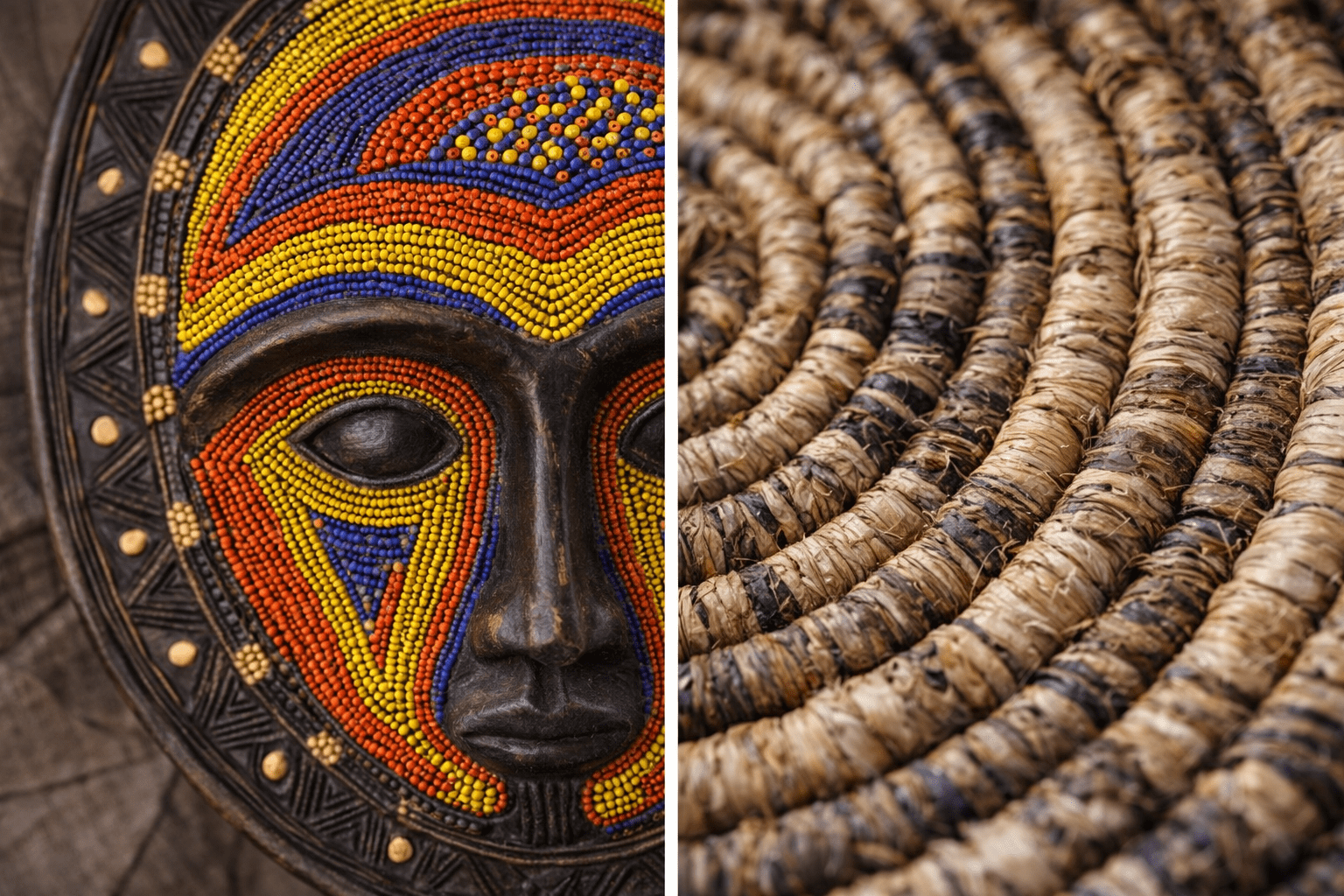
Third, biophilic design. The idea that our homes should connect us to nature through organic shapes, natural textures, and earthy palettes. African handcrafted homeware is biophilic by default: clay, wood, natural fibres, earth tones, organic forms. It doesn't need to try to look natural. It is natural.
Afrohemian is one of the top predicted trends for 2026
Searches for "African boho living room," "Afro chic home decor," and "Afrohemian style" are surging, particularly among Gen X and Boomers. Key features: handwoven baskets, natural fibre rugs, carved wood, earthy tones, tactile layers, and artisan craftsmanship.
The five elements of Afrohemian style
Afrohemian decor works because it follows a simple set of principles. You don't need to understand interior design theory. You just need to layer these five things:
1. Something carved on the wall
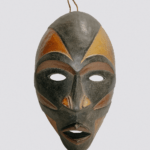
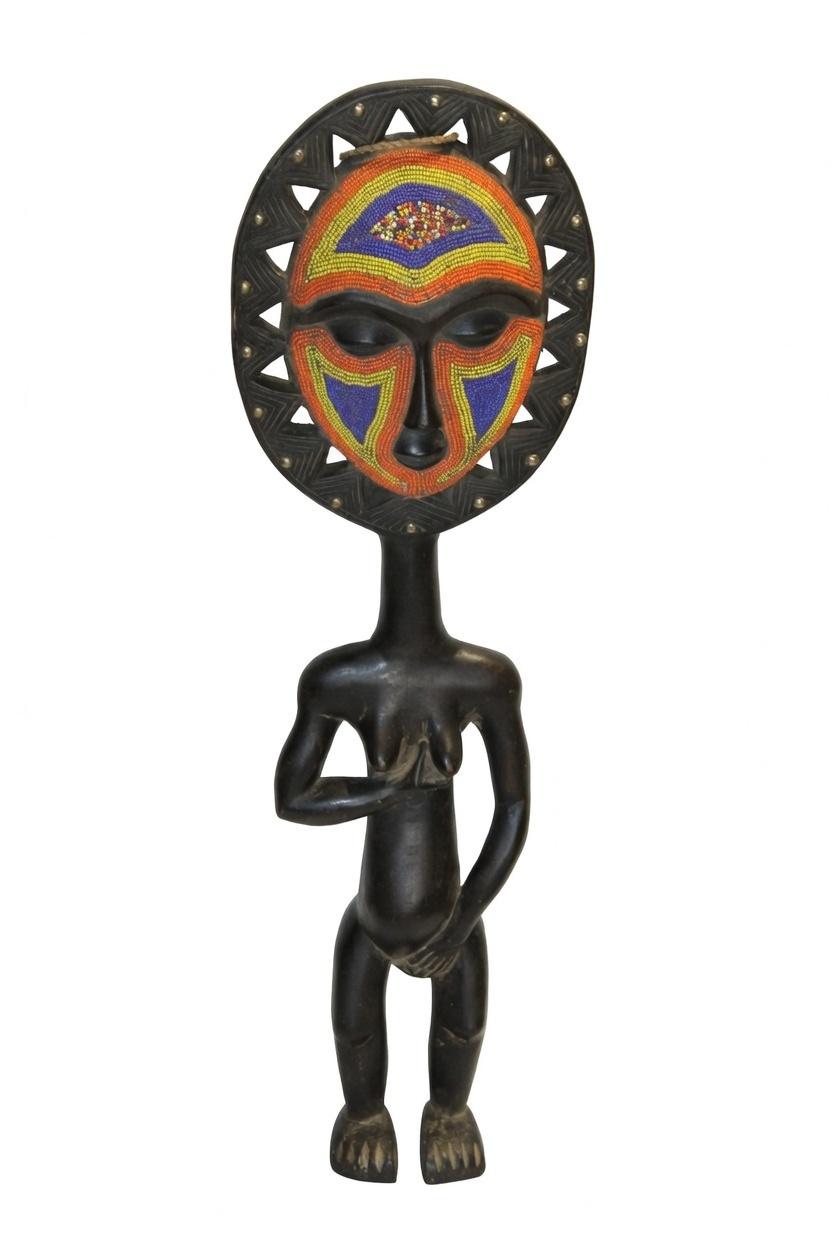
This is the foundation. A hand-carved African mask, a mahogany wall panel, or a grouping of both. The three-dimensional texture of carved wood gives a wall presence that no print or canvas can match. It catches light, creates shadows, and changes throughout the day. In an Afrohemian room, the walls are never bare.
Hand-carved masks from £58. Mahogany wall panels from £68. One piece on one wall transforms the entire room.
2. Something woven at ground level
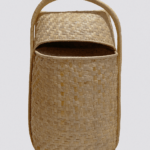
Texture on the floor or at basket height. A handwoven African basket beside a sofa, under a coffee table, or stacked in a trio on a shelf. Natural fibre rugs. Woven plant pot covers. The interplay of woven textures with smooth surfaces (glass, marble, polished wood) creates the layered, tactile quality that defines Afrohemian interiors.
3. Something organic on a surface
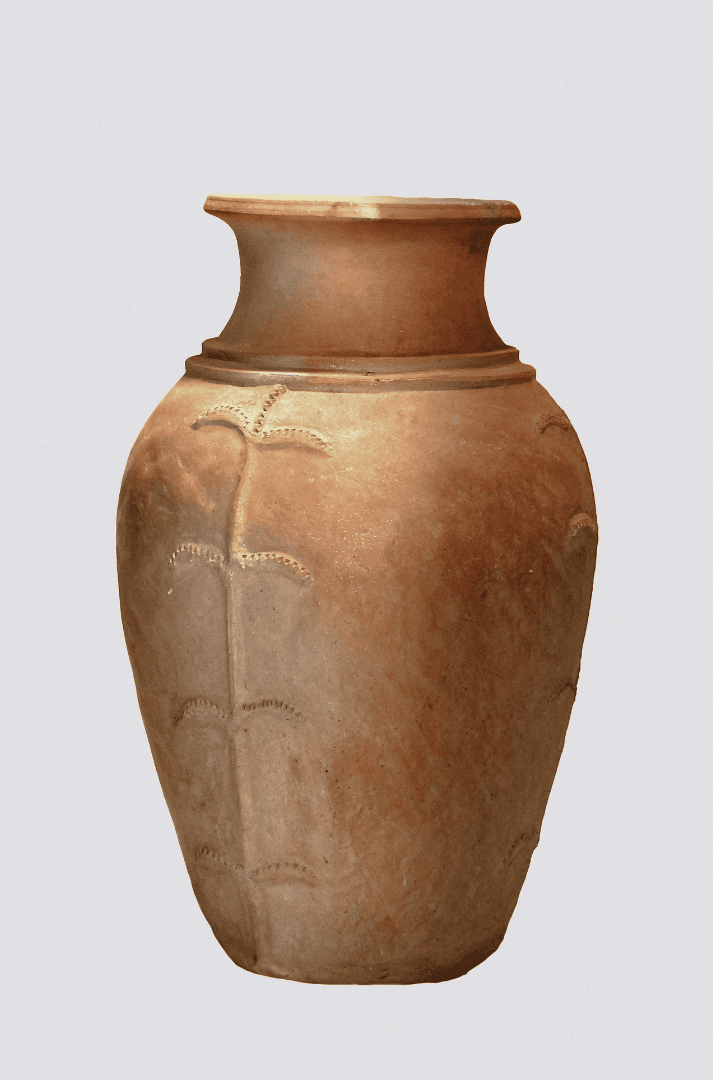
A pottery vase on a dining table or console. A carved gourd on a bookshelf. A wooden statue on a mantelpiece. These are the pieces that ground a room in natural materials. The earth tones of African clay and wood anchor the colour palette and provide visual warmth that synthetic materials simply can't replicate.
4. Something that glows
Lighting is everything in Afrohemian spaces. Handwoven African lampshades filter light through natural fibres, casting warm patterns on walls and ceilings. Paired with candles and soft evening light, they transform a room from "styled" to "lived in." This is the element most people forget, and it makes the biggest difference.
5. Something green
Plants. Trailing pothos in a woven basket. A monstera beside a pottery vase. Dried branches in a clay pot. The biophilic element connects the natural materials of the homeware to living nature, completing the circle. African handcrafted pieces and greenery were made for each other.
Room by room: how to build the look
The hallway
Your hallway is the first thing guests see. It sets the tone for the whole house. A single mask at eye level on the wall, a pottery vase or basket on a console table, and you've immediately created a sense of intention. The hallway says: "This is a home where things are chosen with care."
For Afrohemian styling, keep the hallway pared back. One strong wall piece, one surface piece, and good lighting (a woven lampshade overhead if you have a pendant fitting). Less is more in a narrow space. Let each piece breathe.
The living room
This is where Afrohemian comes alive. The living room has the most wall space, the most surfaces, and the most opportunity to layer. Start with your hero piece on the main wall (above the sofa is the most common spot). A mahogany panel, a bold mask, or a curated group of two or three masks at different heights.
Add supporting pieces: a pottery vase on the coffee table or sideboard, a basket beside the sofa for throws, a small statue or gourd on a bookshelf. These don't compete with the wall piece. They echo it, creating a cohesive thread of natural materials and handmade warmth throughout the room.
Layer in textiles you already own: linen cushions, a chunky knit throw, a jute rug. The beauty of Afrohemian is that it works with what you have. You're adding to your room, not replacing it.
The dining room
A wide pottery vase as a centrepiece, with or without flowers, grounds the table with warmth and substance. It transforms meals into occasions. On the wall, a pair of masks or a single mahogany panel adds cultural richness above the wainscoting or on the feature wall.
For an Afrohemian dining room, think about the tactile contrast: smooth tabletop, textured vase, carved wall art, woven placemats or a table runner. Every surface tells a different story through touch.
The bedroom
Bedrooms are personal. A mask above the headboard creates a sense of guardianship and drama without overwhelming a space that should feel restful. Choose masks with calmer features for the bedroom. The circular designs with intricate line patterns work beautifully here.
Add a handwoven basket on the bedside table for jewellery or small items. A pottery piece on a chest of drawers. A woven lampshade for warm evening light. The bedroom Afrohemian look is softer, quieter, more intimate. Let the natural materials do the work.
The garden and patio
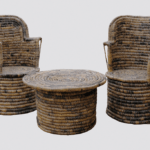
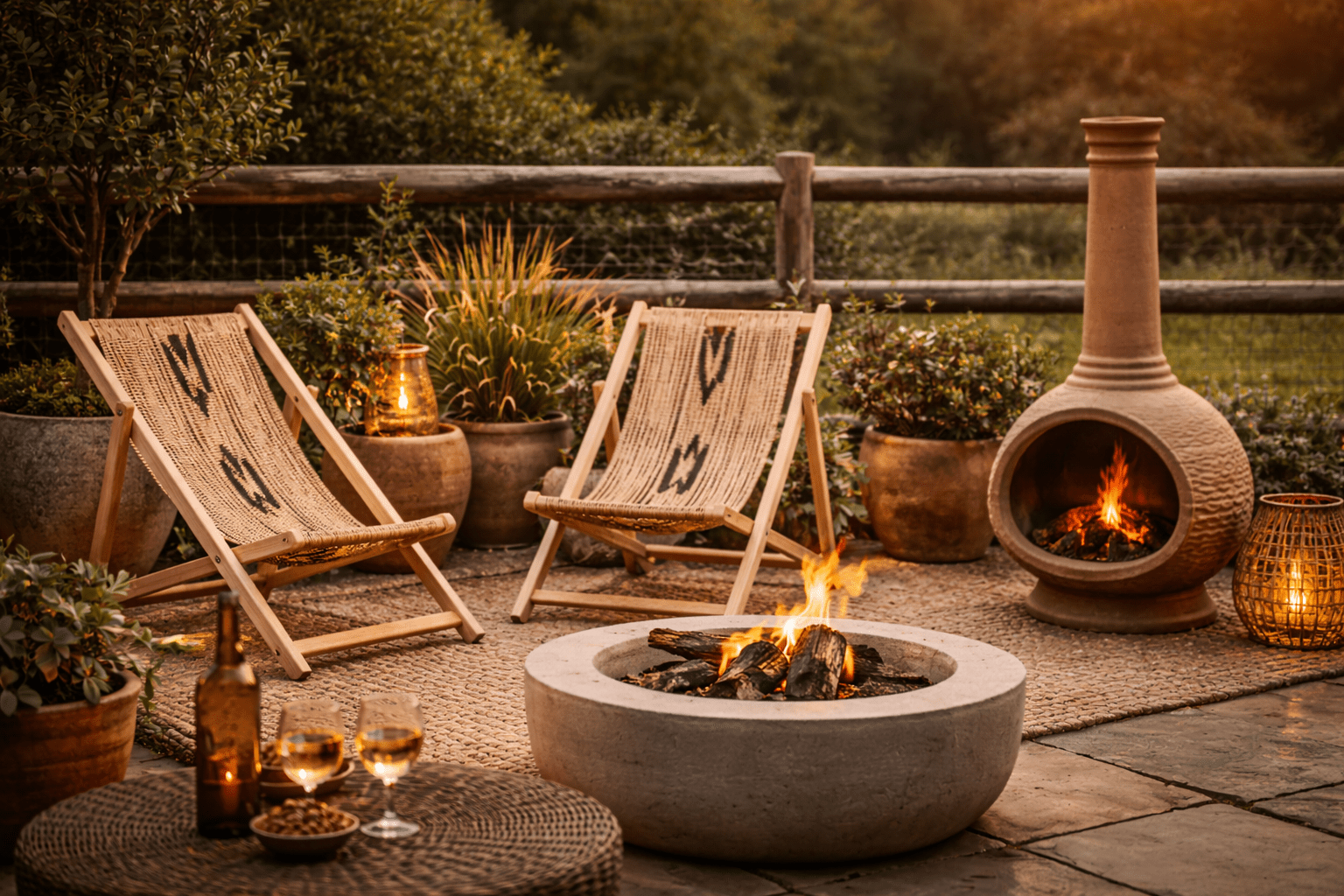
When the weather turns warm, your outdoor space becomes an extension of your home. Handmade African garden furniture, from a single accent chair at £42 to a complete set at £286, brings the same handcrafted warmth outside. Add a pottery vase beside the door. Hang woven lampshades for evening entertaining. The natural materials are built for outdoors, and they only get more beautiful as they weather.
The home office
Millions of British people now stare at the same four walls eight hours a day. A mask on the wall behind your desk adds visual interest and cultural depth. A carved gourd or small statue on a shelf breaks up the monotony. And it's worth noting: a hand-carved African mask behind you on video calls says more about your taste than a blank wall ever will.
Why Afrohemian is more than a trend
Most interior trends peak and fade within a season. Afrohemian is different because it's built on things that don't go out of style: natural materials, handmade quality, cultural heritage, and sustainability. A hand-carved mask doesn't become unfashionable. A pottery vase made from clay doesn't feel dated in two years. These are timeless pieces that happen to be perfectly in tune with where interiors are heading in 2026 and beyond.
The broader shift in UK consumer behaviour is clear. Buyers want to know the story behind what they buy. They want ethical sourcing, natural materials, and pieces that support real artisan communities rather than faceless factories. African handcrafted homeware ticks every box, and it does it at price points that are genuinely accessible.
Demand for ethical African artisan products is rising
Consumer awareness of fair trade, sustainable materials, and cultural heritage is driving a growing market for handcrafted African homeware in the UK. Related segments like sustainable furniture and global home decor are growing at 4 to 9% annually. UK buyers are increasingly seeking items from natural materials that support global artisans and carry genuine cultural significance.
Start your Afrohemian home
The best part of this trend is how accessible it is. You don't need to redecorate. You don't need a designer. You just need one or two well-chosen pieces to shift the entire feel of a room.
A handwoven basket at £8. A carved gourd at £22. A mask at £58. A mahogany panel at £68. A pottery vase at £108. Every piece in the Burudani collection is handcrafted by African artisans, sourced directly from their communities, and delivered free across England.
The trend forecasters have spoken. Pinterest, Vogue, Forbes, and House Beautiful all point in the same direction. But you don't need a trend report to tell you that handmade, natural, and meaningful things make a home feel better. You already knew that.
Now you know what to call it.
Start the look
Handcrafted African homeware for every room. Free delivery across England.
Browse the Collection